The #1 Predictor of STEM Retention Isn’t Flexibility.
It’s Confidence.
Why Experiential Learning Has Become Essential to Student Retention & the Future of STEM Education
The landscape of STEM education is undergoing a profound shift. For the first time, more U.S. college students are learning entirely online than in person. Career-focused certificates and short-term credentials are growing faster than traditional degree programs, and adult learners and working professionals make up a substantial share of the STEM pipeline.
Today’s STEM student is less likely to be the stereotypical undergraduate living on campus and attending scheduled lab sessions each week and more likely to be studying remotely, balancing coursework with a job. While STEM remains strong, the pathways students are taking to get into it look increasingly different from the traditional four-year, on-campus model that has long defined the field.
For these learners, online and hybrid education is not simply a matter of convenience. It is often the only path to earning a degree. This shift presents an extraordinary opportunity for colleges and universities. Online and hybrid STEM programs have opened doors for students who may never have considered science education possible. It has long been established that flexible scheduling has expanded access, diversified enrollment, and helped institutions reach learners whose lives extend far beyond the classroom.
Yet expanding access introduces a new challenge.
STEM has always been grounded in experience. Students do not become scientists by reading about experiments. They become scientists by designing them, testing hypotheses, making mistakes, interpreting results, and gradually building the confidence to apply what they’ve learned. That confidence, as this research suggests, may be one of the most important and overlooked predictors of persistence and retention in online STEM education.
To better understand what today’s online and hybrid STEM learners need to succeed, Labster surveyed 411 students enrolled in four-year undergraduate and graduate online and hybrid STEM programs across the United States and Canada. Conducted between April and June 2026, the study explored how learners choose programs, what keeps them engaged, what threatens persistence, what improves retention, and how experiential learning shapes confidence and career readiness.
The findings reveal a story that extends well beyond online education. They show that learners expect both flexibility and rigor. More importantly, the data reveal that meaningful experiential learning builds the confidence students need to persist in their programs, prepare for the workforce, graduate, and pursue careers in STEM.
Students Are Investing in Their Future
For years, institutions have recognized that flexible online and hybrid scheduling removes geographic barriers, accommodates working adults, and expands enrollment opportunities for learners whose lives cannot fit a traditional academic calendar. That remains true. What has changed is why students are making the choice to a STEM pathway.
Career advancement has become the primary driver behind STEM enrollment decisions. Nearly every student surveyed (94%) said they selected an online or hybrid STEM program because they believed it would help advance their career. At the same time, flexibility remains essential, with more than 4 in 5 students saying the ability to balance education around their lives influenced their decision. Personal passion for STEM also remains remarkably strong (70%), suggesting learners are motivated by both professional aspirations and genuine curiosity.
Students willingly accept demanding coursework because they believe a STEM degree represents higher earning potential (67%), career advancement (69%), and job stability (63%). They are investing significant time, money, and effort because they expect the experience to prepare them for the workforce.
Taken together, these findings paint a clear picture: today’s students are not looking for an easier education. They are looking for an education they can realistically complete and that will prepare them for a future career. They need institutions to show them a path forward.
Programs that successfully combine flexibility with meaningful experiential learning are positioned to attract a growing population of career-focused students who increasingly evaluate schools not only on reputation, but on whether graduates leave feeling capable, confident, and prepared to succeed.
Today’s STEM learners are balancing competing responsibilities while wondering whether an online education can truly prepare them for what’s ahead.
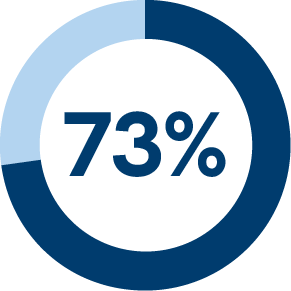
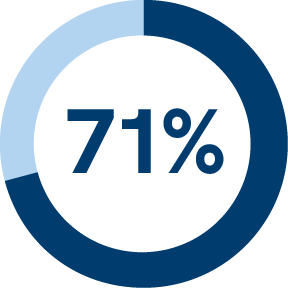
The institutions best positioned for the future will deliver the experiences that transform enrollment into confidence and confidence into career readiness.
The Path to a STEM Career Shouldn’t Feel Out of Reach
Meet Maya. She is 34 years old, works full time, and is pursuing an online biology degree after years away from school. She studies after her children go to bed, completes assignments during lunch breaks, and spends weekends catching up on coursework. She is exactly the type of student online STEM programs were designed to serve. But when laboratory experiences require travel to campus or are limited to a fixed schedule, the balance she has worked so hard to achieve begins to unravel. Missing a lab is more than missing a class. It can mean falling behind in an entire course.
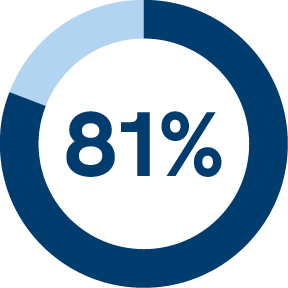
Maya’s story is fictional, but the challenges she faces are not. More than four in five students (81%) say balancing coursework with work and personal responsibilities is difficult. Among fully online STEM students, 40% have questioned whether it is realistic to continue their program because of outside responsibilities. More than half (54%) of those considering leaving cite work-life balance as a primary reason.
Students rarely lose motivation overnight. More often, they lose confidence gradually when they no longer feel prepared to succeed.
Fill out the form to continue reading
We'll send the full ebook to your inbox.