Scientific Modeling & Systems Thinking
Use scientific models to understand system behavior and relationships.
Request a Demo
Collection Simulations
.png?fm=jpg&w=450&h=400)
Cell Membrane and Transport: Modifying the cell membrane
Discover the structure and function of cell membranes using the fluid mosaic model. Apply your learning to improve the health of synthetic cells that the lead researcher wants to use to produce insulin.
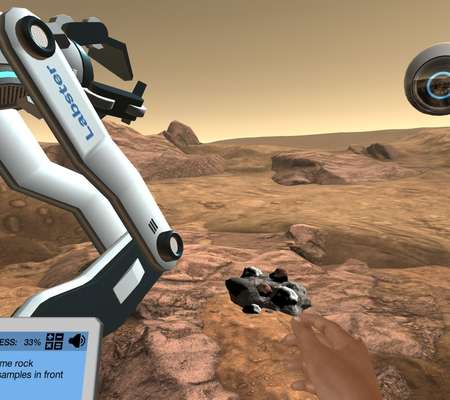
Atomic Structure: Assess the possibility of life on other planets
Learn about the atomic structure of the elements and investigate the properties of element samples from an exoplanet to assess whether life on it is a possibility. Find out what differentiates an atom from an ion and define the isotopes of an element.
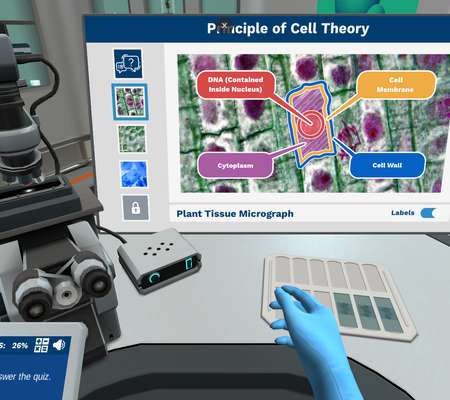
Cell Structure: Cell theory and internal organelles
Explore different cell samples under the microscope to identify the differences between eukaryotes and prokaryotes. Build the structure of an animal cell and choose the internal organelles of four specialized cells.
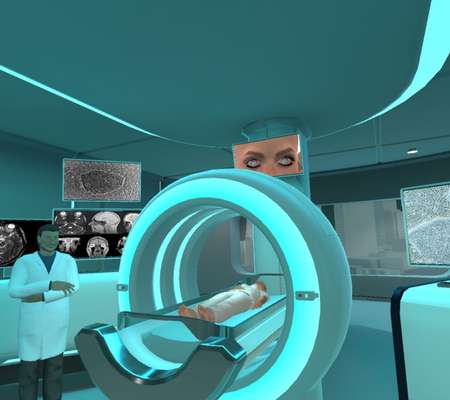
Gene Regulation
Open your eyes to the vast potential of gene regulation, where you can reprogram cells into any cell that fits your needs. Will you able to help the doctor in restoring the sight of a visually impaired girl?
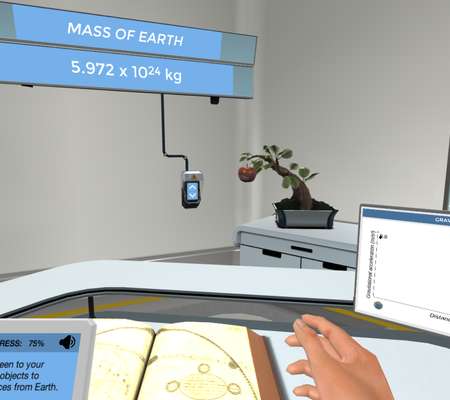
Law of Universal Gravitation: Use gravity to orbit the moon
Learn the basics of gravitation by weighing the famous scientist Sir Isaac Newton and observe the Law of Universal Gravitation in action by changing the mass of the Earth. Travel in space and perform a thought experiment about orbits.
.png?fm=jpg&w=450&h=400)
Inheritance with Pedigrees
Investigate the principles of inheritance and draw a pedigree tree to understand how color blindness is inherited.
.png?fm=jpg&w=450&h=400)
Inheritance with Punnett Squares
Investigate the principles of inheritance and help a family determine whether future generations will inherit color blindness.
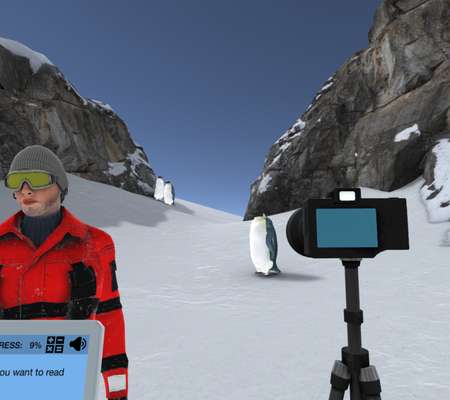
Wave Model of Light (Principles): Use reflection and refraction to take photos
Visit Antarctica to take the perfect picture of a penguin! You will get help from Albert Einstein, who will teach you how reflection and refraction of light affect the photos you take among the snow and ice.
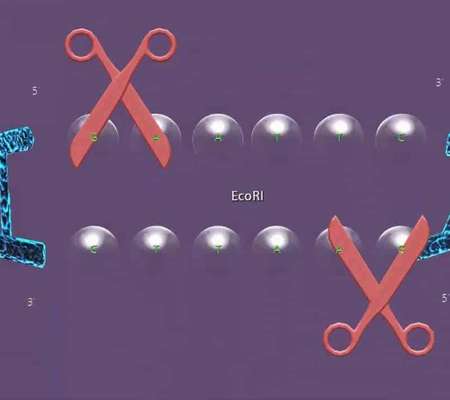
Molecular Cloning
Dive into recombinant DNA technology with cell division, transcription and translation. Includes concepts in restriction enzymes, cloning and reporter genes.
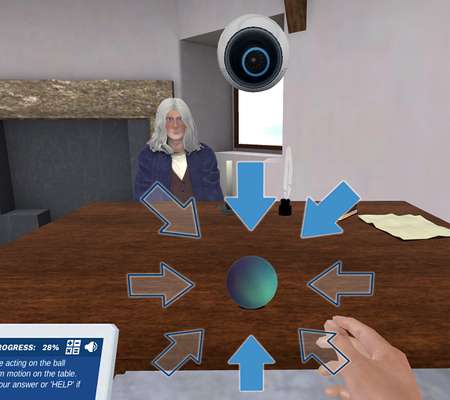
Newton's First Law of Motion: Balanced and unbalanced forces
Travel back in time to 1687 and help Newton remember his first law of motion and what it means for a body to stay at rest or in uniform motion. Learn when two forces are balanced or unbalanced and experiment with his first law of motion in space.
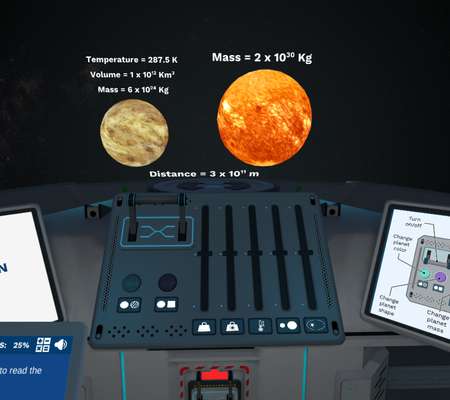
Newton's Law of Gravitation: Mathematical expression of gravitational force
Join Newton in his garden and take a spaceship ride to explore gravity in space. Learn the meaning of each term of the equation of the universal law of gravitation and use it to predict the gravitational attraction between two bodies.
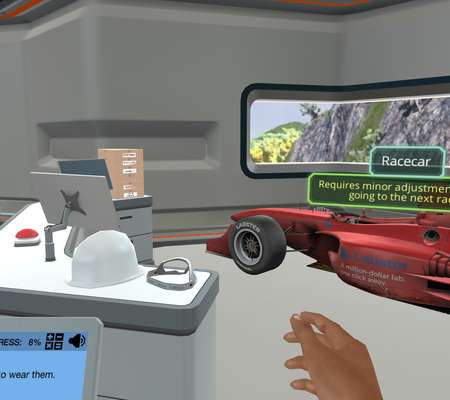
Newton's Laws of Motion: Understand active and passive safety in motorsports
Join a team of motorsport engineers and learn the basics of Newton’s laws of motion. Understand the basic principles of passive and active safety while driving a high-class race car.
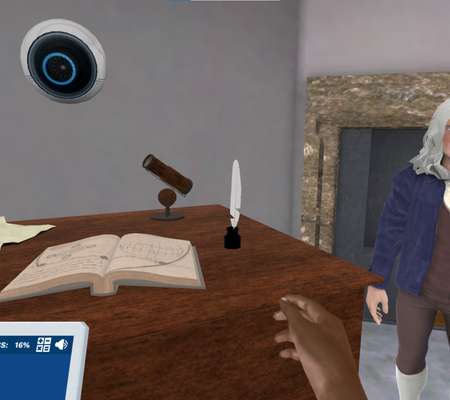
Newton's Second Law of Motion: Speed and Acceleration
Travel through time and space to help Newton remember his second law. Use this physically realistic simulation to experiment with forces and masses, and observe their effects on acceleration and velocity.
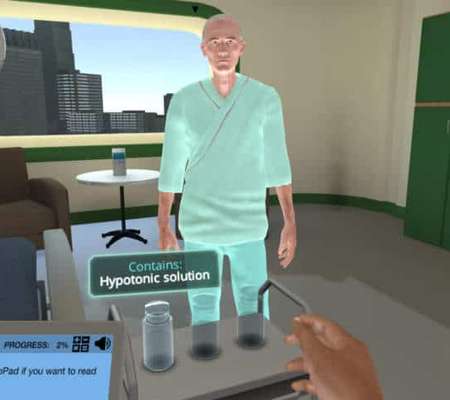
Osmosis and Diffusion: Choose the right solution for an intravenous drip
Help save Frank’s life by choosing the correct saline solution for an intravenous drip. Join Dr. One in the lab to discover what a hypotonic, isotonic and hypertonic solution is and how water is transported across the cell membrane in osmosis.
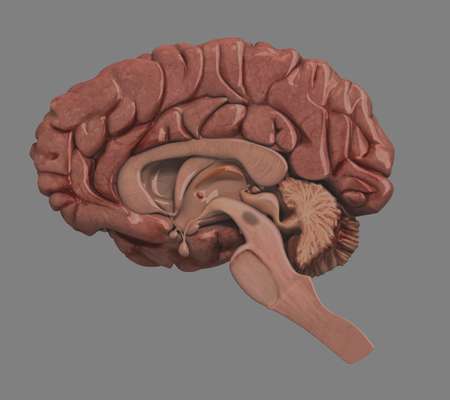
Parkinson's Disease
Use liquid chromatography to purify a protein involved in Parkinson’s disease to learn more about its causes and evaluate the efficacy of a promising molecule for its treatment using confocal microscopy.
Periodic Table of Elements: Get the table organized in time!
Help Dr. One get the periodic table ready in time! By directly observing the elements’ characteristics, testing their flame color, and investigating trends in atomic properties, your mission is to figure out where a number of fallen out elements belong.
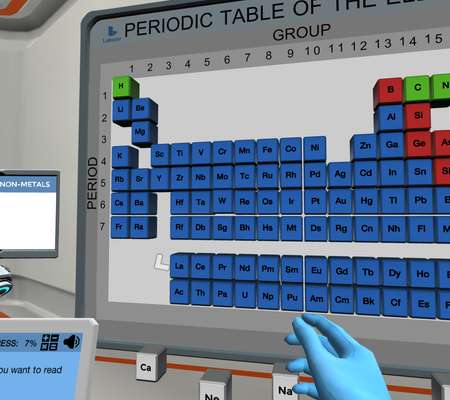
Periodic Table (Principles): Get the table organized in time
Help Dr. One get the periodic table ready in time! By directly observing the elements’ characteristics, testing their flame color, and investigating trends in atomic properties, your mission is to figure out where a number of fallen out elements belong.
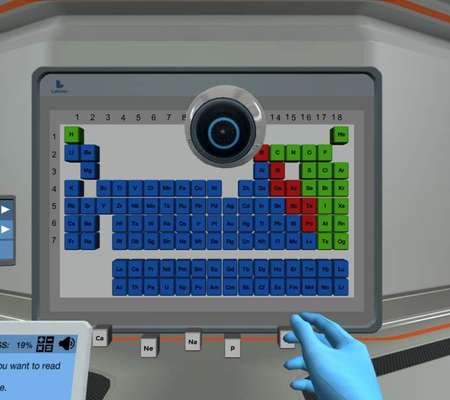
Introduction to Groups of the Periodic Table
Help Dr. One get the periodic table ready in time! By directly observing the elements’ characteristics, and investigating trends in atomic properties, your mission is to figure out where a number of fallen out elements belong.
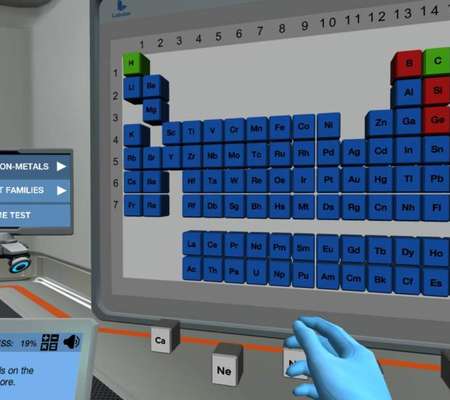
Introduction to Qualitative Analysis of Elements
Help Dr. One get the periodic table ready in time! By directly observing the elements’ characteristics and testing their flame color, your mission is to figure out where a number of fallen out elements belong in the periodic table.
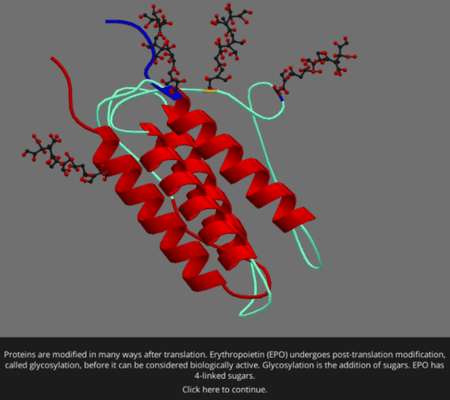
Protein Synthesis
Explore the structure of proteins and learn about the synthesis process inside the cells. Examine the protein sequence to understand the differences of protein synthesis in prokaryotes and eukaryotes.
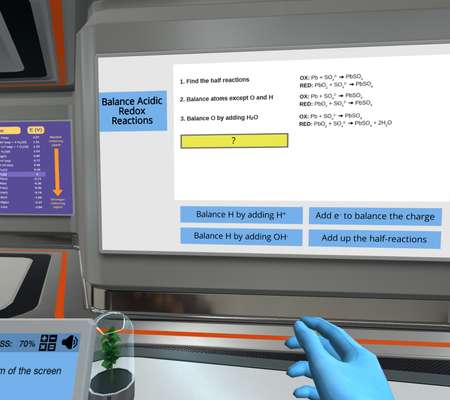
Redox Reactions: Discover how batteries work!
Build your own battery to power an electric car! Discover the chemical reactions that power batteries by finding oxidation numbers, balancing redox reactions, and experimenting with redox reactions in the lab.
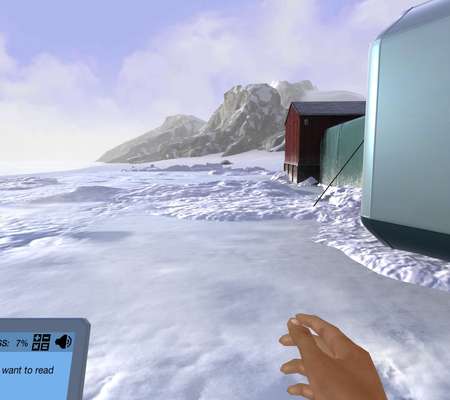
Electrical Resistance: Apply Ohm's law to simple circuits
Build your own resistor to repair a broken radio.
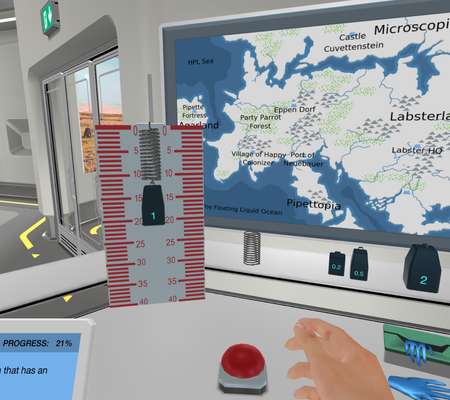
Springs and Masses: Learn how to detect and record earthquakes
Become a spring oscillation master and help determine the magnitude and epicenter of an earthquake using just a mass and a spring.
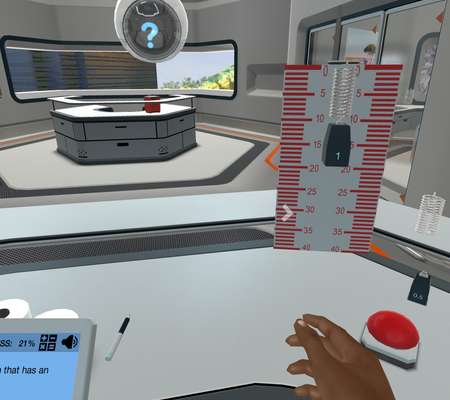
Springs and Masses (Principles): Learn how to detect and record earthquakes
Become a spring oscillation master and help determine the magnitude and epicenter of an earthquake using just a mass and a spring.
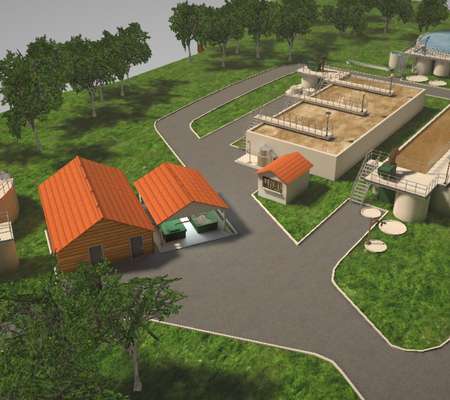
Wastewater Treatment
Study the treatment of urban wastewater. Will you be able to rescue a fish population suffering from pollution?
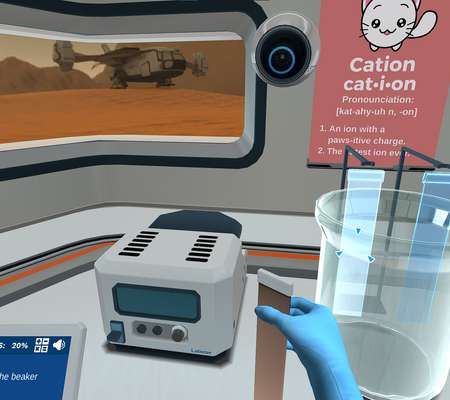
Electrolysis
Experiment with electrolytic cells in a lab on Mars! Assemble different electrolytic cells so you can make hydrogen fuel for your Mars rover, and give mini Dr. One a new gold coating.
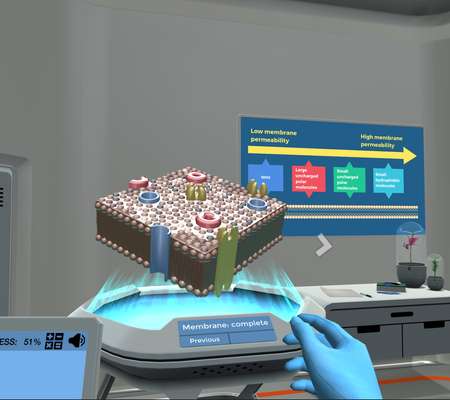
Cell Membrane and Transport: Learn how transporters keep cells healthy
Discover the structure and function of cell membranes by launching cargo molecules at a virtual cell. Apply your learning back in the lab to improve the health of synthetic cells that the lead researcher wants to use to produce insulin.
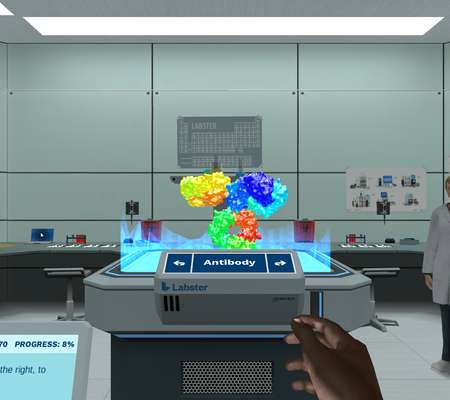
Antibodies: Why are some blood types incompatible?
Learn about the concepts of antibodies and antigens, as well as the ABO and Rhesus blood grouping systems and their importance in blood transfusions. Then, you will help a young couple determine a potential risk for Rhesus disease in their unborn child.
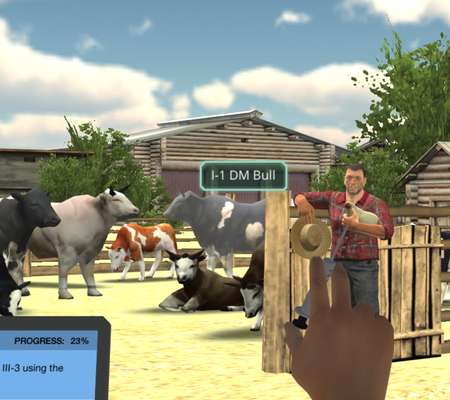
Animal Genetics
Learn about the Mendelian inheritance of double muscling in cattle. Find the responsible gene using linkage analysis and learn how mutation in this gene alters gene expression resulting in double muscled cattle.
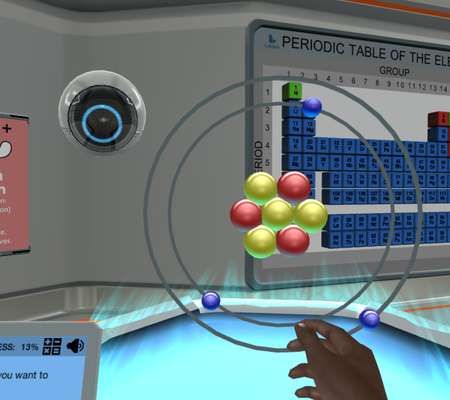
Atomic Structure (Principles): Atoms and isotopes
Learn about the atomic structure of the elements and investigate the properties of element samples from an exoplanet to assess whether life on it is a possibility. Find out what differentiates ions and isotopes of an element.
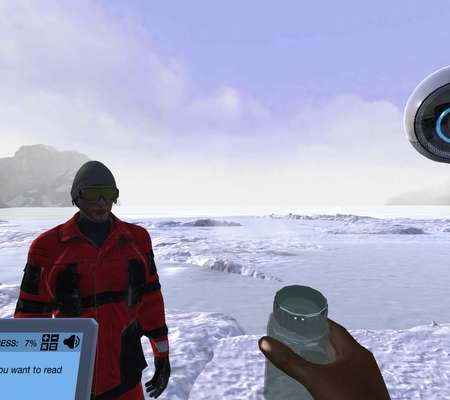
Bacterial Cell Structures: An introduction to the bacterial cell
Visit a research station in Antarctica and help the researcher Nicolas explore bacteria in melting water. Uncover the features that are necessary for bacterial survival and compare these to other bacteria living elsewhere.
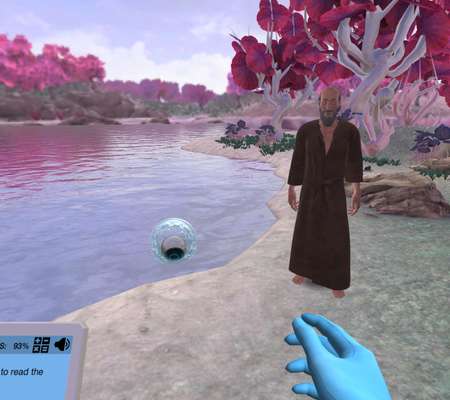
Applications of Buoyancy: floatation
Join Dr. One at the lake and learn what it takes to make an object float or sink. Find out how the density of a liquid does significantly impact the buoyancy of an object and how much of a floating object is submerged below the surface.
.png?fm=jpg&w=450&h=400)
Energy Surfaces and Spontaneous Reactions
Learn the core concepts of thermodynamics and discover how chemical reactions can be represented with energy surfaces. Determine which chemical reactions are spontaneous.
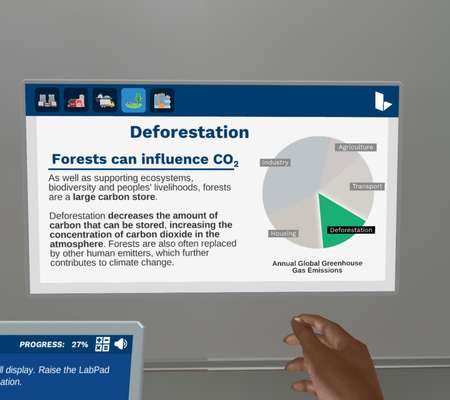
Human Impact on Climate Change: Balance human emissions and a growing population
Use a climate model to investigate the effects of anthropogenic climate change on people and the environment. Why are scientists pushing to decrease global emissions? What will happen if we don’t? The fate of the world is in your hands!
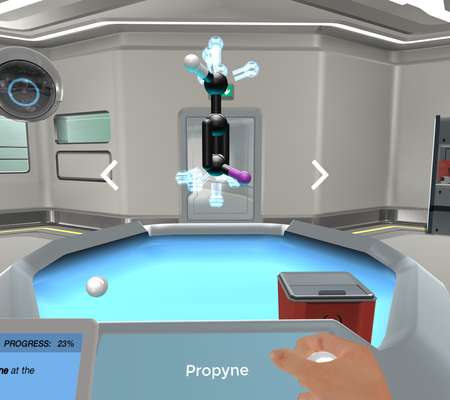
Organic Chemistry Introduction: Learn about organic compounds
Learn about the structure, nomenclature and a few reactions of organic compounds, and use this knowledge to help out your virtual friend Simon with some strange medicine!
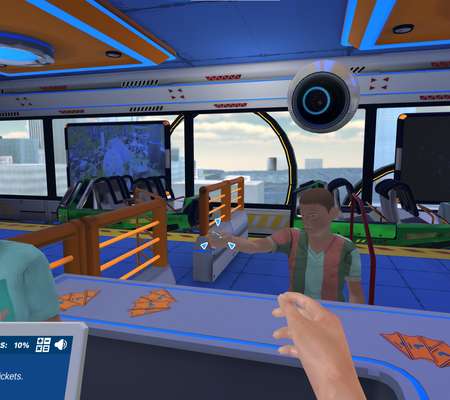
Conservation of Energy (Principles): Unleash the roller coaster's potential
What does it take to make a roller coaster reach 100 km/h? Join the Labster's roller coaster engineering team and use the conservation of energy to design our most exciting ride yet!
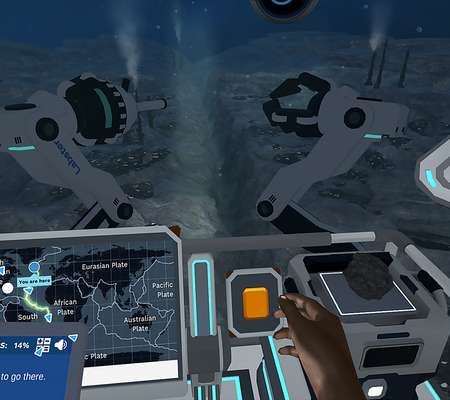
Plate Tectonics: Boundaries and crustal features
Explore real-world, iconic landforms created by different boundaries between tectonic plates. Determine if a plate boundary is convergent, divergent, or transform, and learn how continental and oceanic crust can influence the type of landform created.
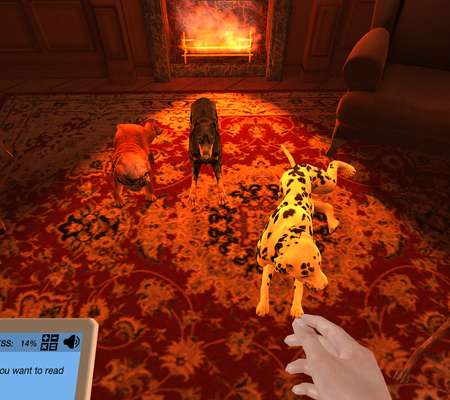
Evolution: Journey of the canids
Follow the million-year evolutionary journey of a canid colony as you create random mutations in their DNA.
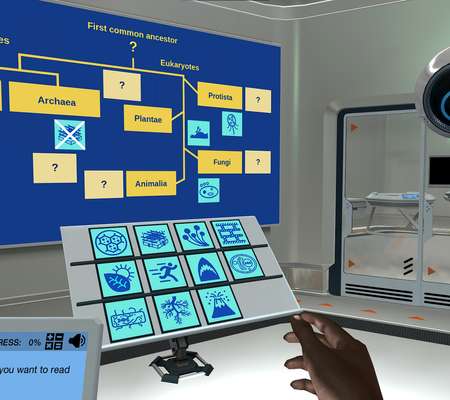
Evolution: Taxonomic tree of life
Build a taxonomic tree that unites all life on Earth by exploring the differences between organisms.
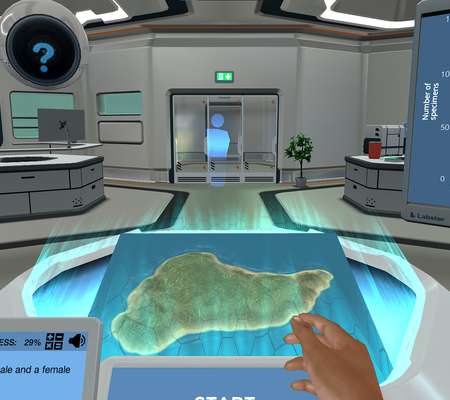
Evolution: Generations of an allele
Dive into the evolution of whales! Follow the path of a gene from a rare mutation to being stuck in a population through natural disasters and competition.
.png?fm=jpg&w=450&h=400)
Evolution: Identifying a deep sea creature
Dive into the evolution of whales: from a sequence of nucleotides to a 30-meter long blue whale.
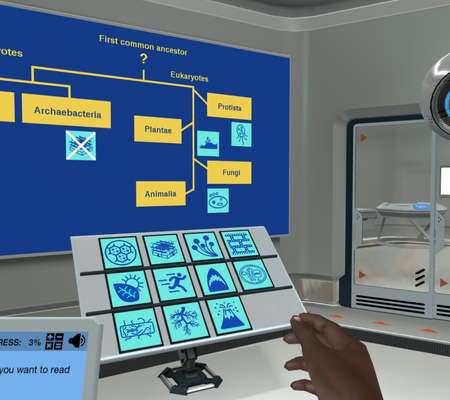
Evolution: Founding theories and principles
Follow the million-year evolutionary journey of a canid colony as you create random mutations in their DNA and critique biological evidence to build a taxonomic tree that unites all life on Earth.
Evolution: Are you related to a sea monster?
Learn the basic mechanisms of evolution in order to simulate how a population evolved over hundreds of years, and learn how random mutations are the basis of natural selection.
Food webs: Learn about interactions between trophic levels
Help reduce the impact from humans on an aquatic ecosystem on an exoplanet by using your knowledge of trophic cascades in a food web.
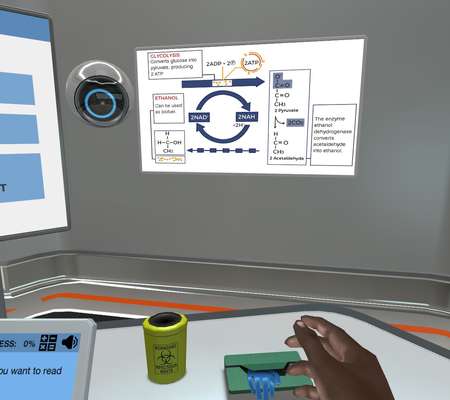
Fermentation: Optimize bio-ethanol production
Learn how to optimize alcohol production in a fermentor. Will you be able to create the ideal conditions for the yeast Saccharomyces cerevisiae to produce bioethanol?
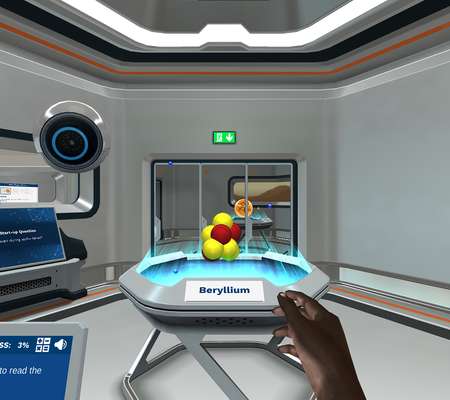
Fission: Discover a powerful energy source
You're on a mission to learn about fission and how we harness it as a sustainable energy source. Journey into the heart of a reactor and answer the lab's security questions to activate it.
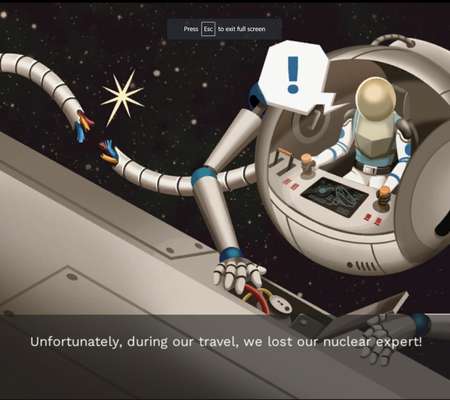
Fusion: The Future of Energy
Fusion is the future of energy and it's up to you to figure out how to harness it. Explore this advanced fusion reactor and learn all of the science needed to have the power of the sun in the palm of your hand.
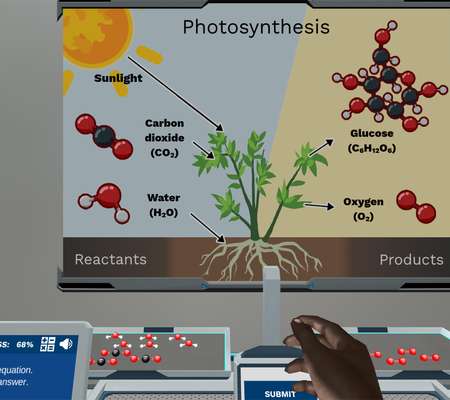
Formulas and Equation Balancing: Save the chemistry lab!
Discover the importance of chemical reaction equations and learn how to balance them. Use your balancing skills to get to the research facility control room before an incoming comet strikes!
Ideal Gas Law: Introduction
Observe the behavior of an ideal gas and the effects on this behavior when external variables are altered. Learn how the different variables affect the behavior and understand the relation of these variables to the ideal gas law equation.
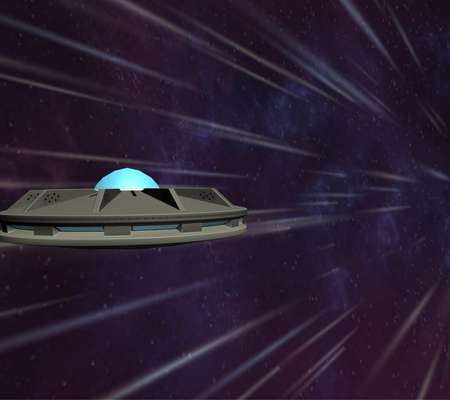
The Gravitational Field: The aliens are coming
Help the alien Pondus study gravitational acceleration on Earth and find out how Earth’s mass and the distance from where we measure it affects the strength of Earth’s gravitational field.
Find Virtual Labs That Perfectly Match Your Syllabus
Get Instant, Personalized Recommendations to Help Reinforce Your Course Content